Every great artist from Caravaggio to Frida Kahlo has fought the same invisible war, and Stephen Roach makes the case that it is not a coincidence.
In this solo reflection, Stephen traces a decade-long question that has haunted him: why does creative expression seem to attract so much internal and external opposition? Drawing on scripture, church history, and the lives of artists who battled addiction, trauma, and mental illness, he builds a case for why creativity and faith are so deeply intertwined, and why that connection makes artists a centerpiece in a spiritual battle.
He highlights an uncanny parallel between the King of Tyre in Ezekiel 28 and the artisans in Exodus, then lands in the present moment, asking what it means to keep making human art in an age of artificial intelligence. Listeners will walk away with a framework for understanding creative resistance and a renewed sense of why their work matters.
KEY TOPICS COVERED
• Why creativity is rooted in the image of God
• The historical pattern of struggle among great artists, from addiction to mental illness
• The church's complicated relationship with the arts
• What the rise of AI means for the future of human creativity
• Why art may be the last human frontier in an automated world
ABOUT THE HOST
Stephen Roach is the host of Makers and Mystics, a podcast exploring the intersection of creativity, faith, and the human experience. He is an artist, curator, poet, and musician. He is currently writing How to See Invisible Things, a book exploring the inner life of art and faith. Stephen has spent over a decade advocating for creativity as a spiritual discipline.
RESOURCES AND LINKS
The War of Art by Steven Pressfield - referenced for its concept of Resistance and creative struggle
In this episode of Makers & Mystics, Stephen Roach continues the series The Pace of Beauty with Dr. Timothy Patitsas, author of The Ethics of Beauty.
Focusing on Chapter Six, The Mystical Architect, they explore the inseparability of beauty and goodness, the cruciform nature of the artist’s journey, and how trauma has shaped modern art’s uneasy relationship with beauty. Together, they consider architecture as a foundational pattern of experience and the slow work of cultural renewal through restored patterns of beauty.
Learn more about Dr. Patitsas and his work:
https://www.stnicholaspress.net/store/the-ethics-of-beauty
Get Tickets to The Breath and The Clay 2026 featuring Malcolm Guite, Jon Guerra, and Jonathan Pageau! March 20-22 in Winston-Salem, NC.
Sign Up for Our Newsletter! http://eepurl.com/g49Ks1
For many people, and perhaps even for some of our listeners, the Bible elicits a very different response from one person to another. For some, it is a source of comfort and spiritual nourishment, even a great source of creative inspiration, while for others, it brings up difficult questions or even negative emotions and uncomfortable associations.
But as we’ve talked this season about disenchantment and reclaiming wonder, I’m curious if taking a second look at this collection of stories, songs, and spiritual directives may be yet another unexpected doorway into wonder.
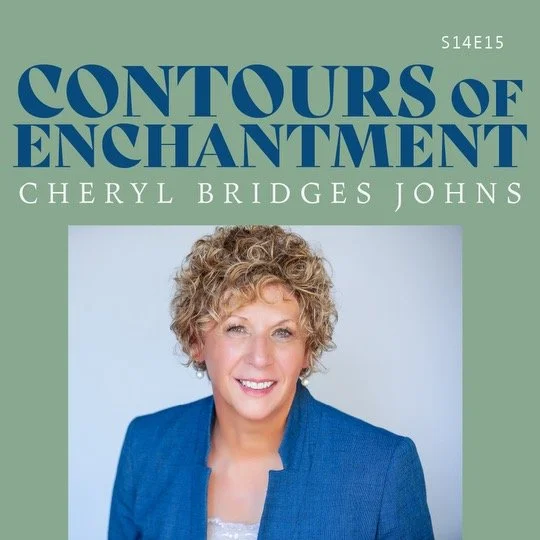
My guest today is author and scholar Cheryl Bridges Johns. Cheryl is the author of four books including Re-enchanting The Text: Rediscovering the Bible As Sacred, Dangerous and Mysterious.
In our conversation, we discuss the impact of looking at scripture solely from a didactic viewpoint and what may occur in the reader who instead approaches the Bible as a mystical text with the uncanny ability to change and transform, even re-enchant its reader with a renewed spiritual vitality and understanding of God and the human condition. Cheryl and I also discuss the importance of nature as God’s second book and the role of imagination in creating the world around us.
Patrons of the podcast can enjoy an additional interview segment with Cheryl offering several practices to unlock a renewed vision on your creative and spiritual life.
Read MoreWhen we think of wonder or beauty, we might be inclined to think in terms of an external appearance, a scene of nature or an attractive person. But what if wonder is something that grows from the inside out? What if wonder is way of seeing? And what if wonder is an interior force, one that begins in the hidden recesses of our perceptions?
Today, on the show I’m talking with Oregon-based, poet, writer and critic, Paul J Pastor. Paul serves HarperCollins as senior acquisitions editor for their Zondervan imprint, and also serves as a contributing editor for Ekstasis magazine. He's the author of several books, including Bower Lodge: Poems, and two forthcoming titles: The Locust Years and The Fire Cantos.
In our conversation, Paul and I discuss the importance of learning to see as a means of engaging wonder. Drawing from the work of William Blake, Flannery O’ Connor and stories from the Gospels, this episode takes us on a journey into our perceptions and invites us to reconsider beauty as more than an aesthetic experience.
Read MoreToday on the podcast, we are continuing our discussion of art and identity by taking a look at the vital role of our relationship to our bodies.
Why is it important that we honor and understand our bodies? Why is having a right relationship to our bodies imperative to the quest of art and knowing our true selves?
Joining us for this discussion is Professor of Theology and Culture at Fuller Theological Seminary, David O. Taylor.
David Taylor has long been a voice and an advocate for the arts within academia and faith contexts.
In 2016, he produced a short film on the Psalms with Bono and Eugene Peterson. His previous books include: Open and Unafraid: The Psalms As A Guide to Life, and Glimpses of The New Creation: Worship and The Formative Power of The Arts.
In this episode David discusses his latest book, A Body of Praise: The Role of Our Physical Bodies in Worship.
Read MoreJeremy Begbie is a Scottish theologian, author and musician. We interviewed Jeremy in Season 5 of the podcast on his book Redeeming Transcendence In The Arts.. In this bonus REPLAY episode, we are revisiting a segment from this conversation which ties in perfectly to the theme of Season 11.
More About Jeremy:
Jeremy Begbie teaches systematic theology and specializes in the interface between theology and the arts. His particular research interests are in the interplay between music and theology.
Previously associate principal of Ridley Hall, Cambridge, he has also been honorary professor at the University of St Andrews, where he directed the research project, Theology Through the Arts at the Institute for Theology, Imagination and the Arts. He is a senior member of Wolfson College and an affiliated lecturer in the faculty of music at the University of Cambridge.
He studied philosophy and music at Edinburgh University, and theology at Aberdeen and Cambridge. A professionally trained musician, he has performed extensively as a pianist, oboist and conductor. He is an ordained minister of the Church of England, having served for a number of years as assistant pastor of a church in West London.
He is author of a number of books, including A Peculiar Orthodoxy: Reflections on Theology and the Arts (Baker); Redeeming Transcendence: Bearing Witness to the Triune God (Eerdmans), and Theology, Music and Time (CUP). Resounding Truth: Christian Wisdom in the World of Music (Baker/SPCK) won the Christianity Today 2008 Book Award in the Theology/Ethics Category. Most recently, he has published Theology, Music, and Modernity (OUP). He has taught widely in the UK and North America, and delivered multimedia performance-lectures across the world, from Israel to Australia and Hong Kong.
For more information or to contact Jeremy Begbie, visit jeremybegbie.com.
Read MoreMalcolm Guite is an English poet, academic and priest in the Church of England. He is a fellow of Girton College in the University of Cambridge and has published widely in the field of theology and literature.
His research interests include the intersection of religion and the arts and the examination of the works of J.R.R. Tolkein, C.S. Lewis and Samuel Taylor Coleridge.
In this episode Malcolm and I discuss what I’ve termed as the poetics of restoration and how poetry and literature hold keys to understanding and even bridging the gaps between tradition and originality.
Patrons of the podcast can enjoy three additional interview segments with Malcolm, one on the moral imagination (which members of our creative collective will recall from discussions in our last book club.) also Malcolm’s thoughts on imagination as empathy, and practices to can we establish to achieve longevity for the artist and writer.
Support The Podcast. Get The Exclusive Content.
Brightbell Creative: Meaningful Marketing For The Creative Artist
Read MoreDr. Dan Allender is the best selling author of numerous books including The Wounded Heart, The Healing Path, To Be Told, and God Loves Sex. Most recently, he co-authored Redeeming Heartache: How Past Suffering Reveals Our True Calling with Cathy Loerzel.
Having spent thirty years pioneering a unique therapy centered around inner transformation, Dan has seen healing occur in countless individuals by connecting the story of the gospel to people’s universal heart wounds. As a cofounder of both the Seattle School of Theology and Psychology and the Allender Center, Dan has trained therapists, pastors, artists, and leaders to more effectively serve in the context of the 21st century.
In this episode, Stephen Roach returns to the podcast for this timely episode about creativity, the troubled nature of the artist and Dan’s latest book, Redeeming Heartache: How Past Suffering Reveals Our True Calling.
Patrons of the podcast can enjoy an additional interview segment with Dan on Sabbath, delight and why confronting our own past suffering is important to the creative process.
Amy-Jill Levine (“AJ”) is University Professor of New Testament and Jewish Studies and Mary Jane Werthan Professor of Jewish Studies at Vanderbilt. Her books include The Misunderstood Jew: The Church and the Scandal of the Jewish Jesus and Short Stories by Jesus; four children’s books (with Sandy Sasso); The Gospel of Luke (with Ben Witherington III); and The Jewish Annotated New Testament (co-edited with Marc Brettler).
In 2020 she published The Bible With and Without Jesus: How Jews and Christians Read the Same Stories Differently (with Marc Brettler); and Sermon on the Mount: A Beginner’s Guide to the Kingdom of Heaven.
She is the first Jew to teach New Testament at Rome’s Pontifical Biblical Institute. AJ describes herself as an unorthodox member of an Orthodox synagogue and a Yankee Jewish feminist who teaches New Testament in a Christian divinity school in the Buckle of the Bible Belt.
In this episode, I talk with AJ about how we interpret Jesus’s parables and why having a clear contextual understanding of Jesus’s stories is important both spiritually and creatively.
Read MorePádraig Ó Tuama is an Irish poet and theologian whose work centers around themes of language, power, conflict and religion. His poetry and prose has been published widely across Ireland, the US and the UK. For Ó Tuama, religion, conflict, power and poetry all circle around language, that original sacrament. In the context of public theology, he takes the received form of biblical texts and explores the civic and artistic dynamics of language, narrative and impact in these stories.
Pádraig is a voice for LGBT inclusion and for the value of arts in public life. He presents Poetry Unbound with On Being Studios, a podcast that explores a single poem in each episode.
In this episode, Padraig and I share a conversation on his background as a poet, theologian and how the arts and language play a central role in reconciliation and conflict resolution.
Padraig’s work in language and conflict resolution is a vital contribution to finding a way forward through our current cultural moment.
Patrons of the podcast can enjoy the full, unedited interview at: http://www.patreon.com/makersandmystics
Read MoreThis Season Premiere Episode features a conversation with writer and director, Ryan Daniel Dobson of the feature film HOSEA, along with the film’s music composer, Michael Gungor of Gungor music and The Liturgists podcast.
After studying theology in college, Ryan turned his attention to the entertainment industry with a focus on marrying theological and philosophical concepts to powerful visual storytelling.
The feature film HOSEA follows this trajectory with a modern adaptation of the biblical narrative by the same name. The film takes place in the southern landscape of Oklahoma and follows the story of a young girl by the name of Cate and her childhood friend Henry. Cate’s story is one of substance abuse, mental illness, prostitution and the search for self-worth and acceptance.
In this episode, I talk with Ryan and Michael about the film, their creative collaboration and why it is important to reconsider familiar spiritual narratives apart from inherited cultural interpretations.
You can discover more about the film by visiting Hoseafilm.com
Read MoreHoward Washington Thurman was a poet, mystic, philosopher and spiritual activist. He authored more than twenty books in his lifetime and played a leading role in The Civil Rights Movement where he served as a spiritual mentor to Dr. Martin Luther King Jr.
Read MoreJohn O’ Donohue was a modern-day mystic, philosopher, theologian and poet. He spent his life along the West Coast of Ireland where the solitude and beauty of the land shaped him as an artist and thinker.
Read MoreMeister Eckhart was a late 13th and early 14th century philosopher, theologian and mystic born in central Germany. In 1326, he was accused of 150 accounts of heresy and went on to be tried before the Catholic Inquisition. Today, however, Meister Eckhart’s writings have influenced artists and spiritual seekers from most every tradition and walk of life.
Articles and blogs mentioned in this episode:
Read MoreJohn Scotus Eriugena was an Irish theologian, philosopher, and poet. This artist profile is guest hosted by spiritual director, Sarah DeShields.
Read MoreNicholas Berdyaev was a Russian philosopher who believed our mission as human beings is to be collaborators with God in His continuing creation of the world. In this episode, Stephen highlights a passage from Berdyaev's book, The Meaning of The Creative Act on creativity and redemption.
Read MoreDavid Taylor is a professor of theology and culture at Fuller University in Houston, Texas. His work centers on revitalizing the church through the creative arts. He has written and edited several books including his most recent, The Theater of God’s Glory: Calvin, Creation and the Liturgical Arts.
In 2016, David produced a short film on the psalms with Bono and Eugene Peterson. He has lectured widely on the arts in both academic and popular settings, in the United States and abroad.
In this episode, Stephen talks with David about his work with Bono and Eugene Peterson as well as his perspective on the relationship between artists and the church.
Sponsor: Red River Turning Company
Featured Music: Sister Sinjin
Join The Makers & Mystics Creative Collective!
The Theater of God’s Glory (book)
Bono and Eugene Peterson: The Psalms
Read MoreA brief introduction to the novelist and thinker, Dorothy Sayers.
Read MoreIn this keynote talk, Stephen Roach proposes that creativity is our birthright and essential to fulfilling God's original design for humanity. Stephen encourages that we are in the midst of a creative awakening and calls the church to break free from religious oppression into the creative liberty of sons and daughters.
Read More
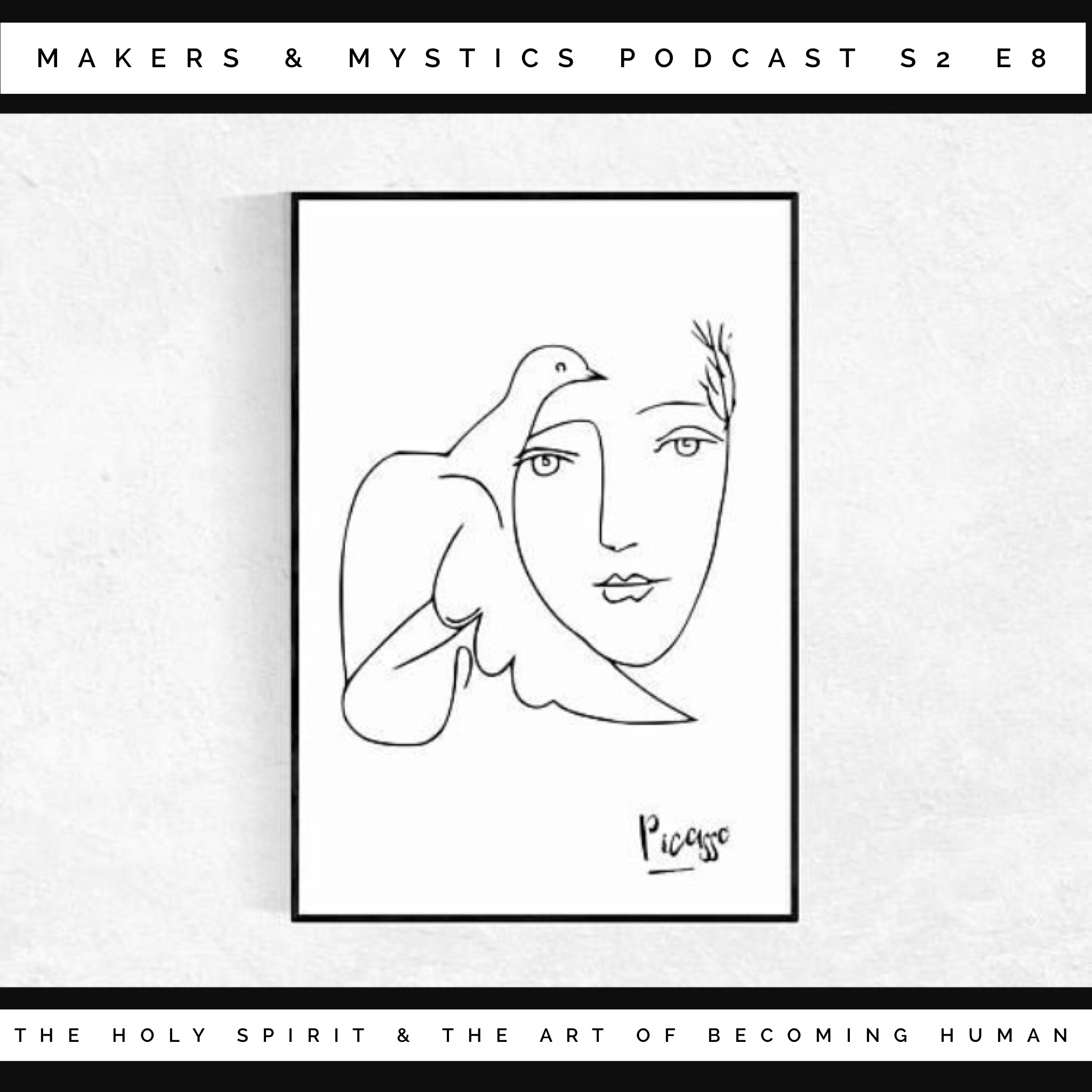
"Art is often viewed as being inherently spiritual. But what does it mean to describe an experience of art or beauty as "spiritual"? Is there a relationship between the spiritual experience a person has in the presence of a work of art and the Holy Spirit of Christian faith?"
In this episode, Stephen Roach explores these ideas with theologian, Dr. Steven Guthrie. Their discussion centers on elements from Dr. Guthrie's book, Creator Spirit: The Holy Spirit & The Art Of Becoming Human. In their discussion, Stephen and Dr. Guthrie reference ideas from Plato, Russian abstract artist Kandinsky and the composer, Arnold Schoenberg. Dr. Guthrie unpacks how each of these artist's and philosopher's views of spirituality compares to the bible's depiction of the Holy Spirit.
Read MoreIn everything from our worship, to the art we make to the way we live our lives amidst a secularized culture, beauty is the often overlooked, yet powerful component of sharing the reality of the gospel.
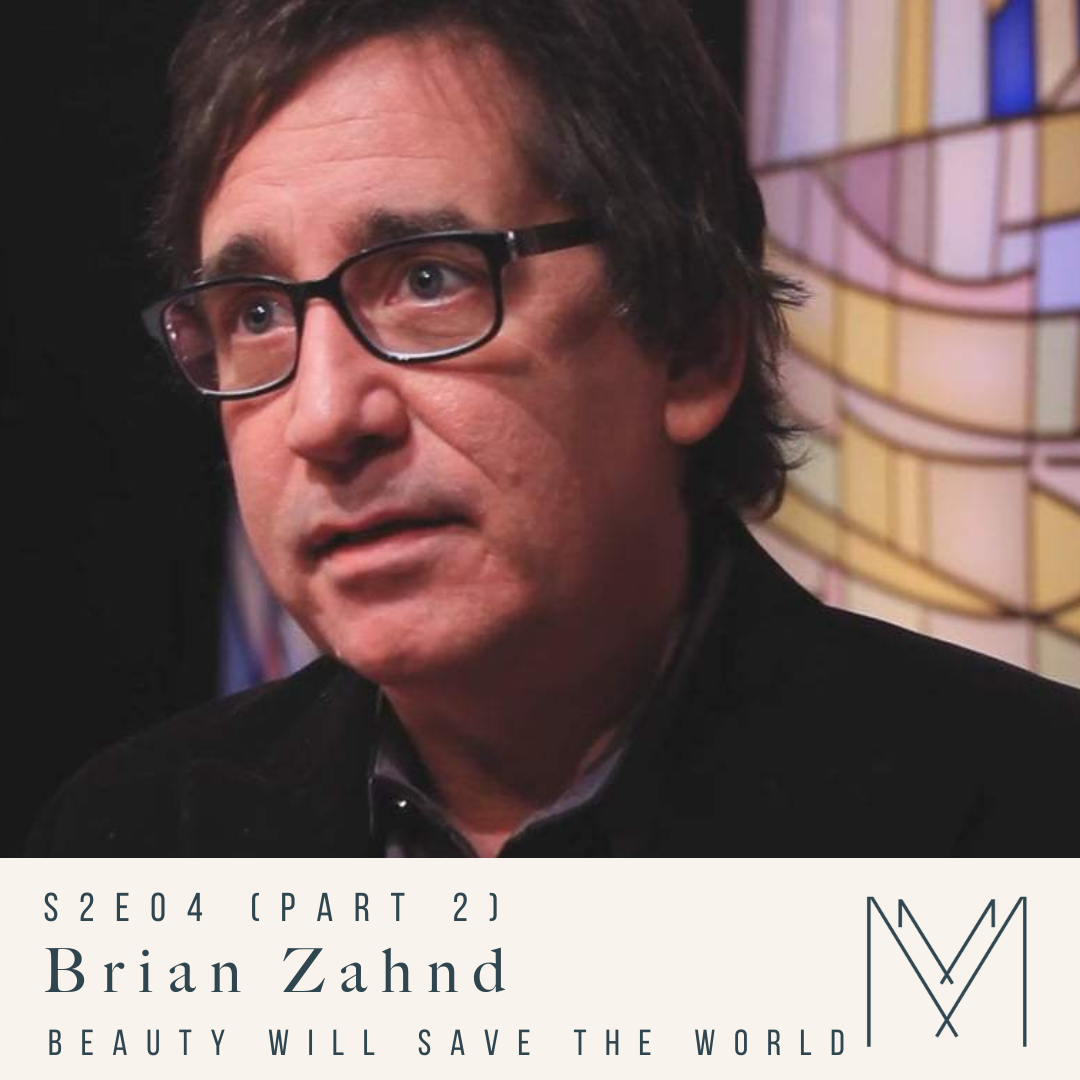
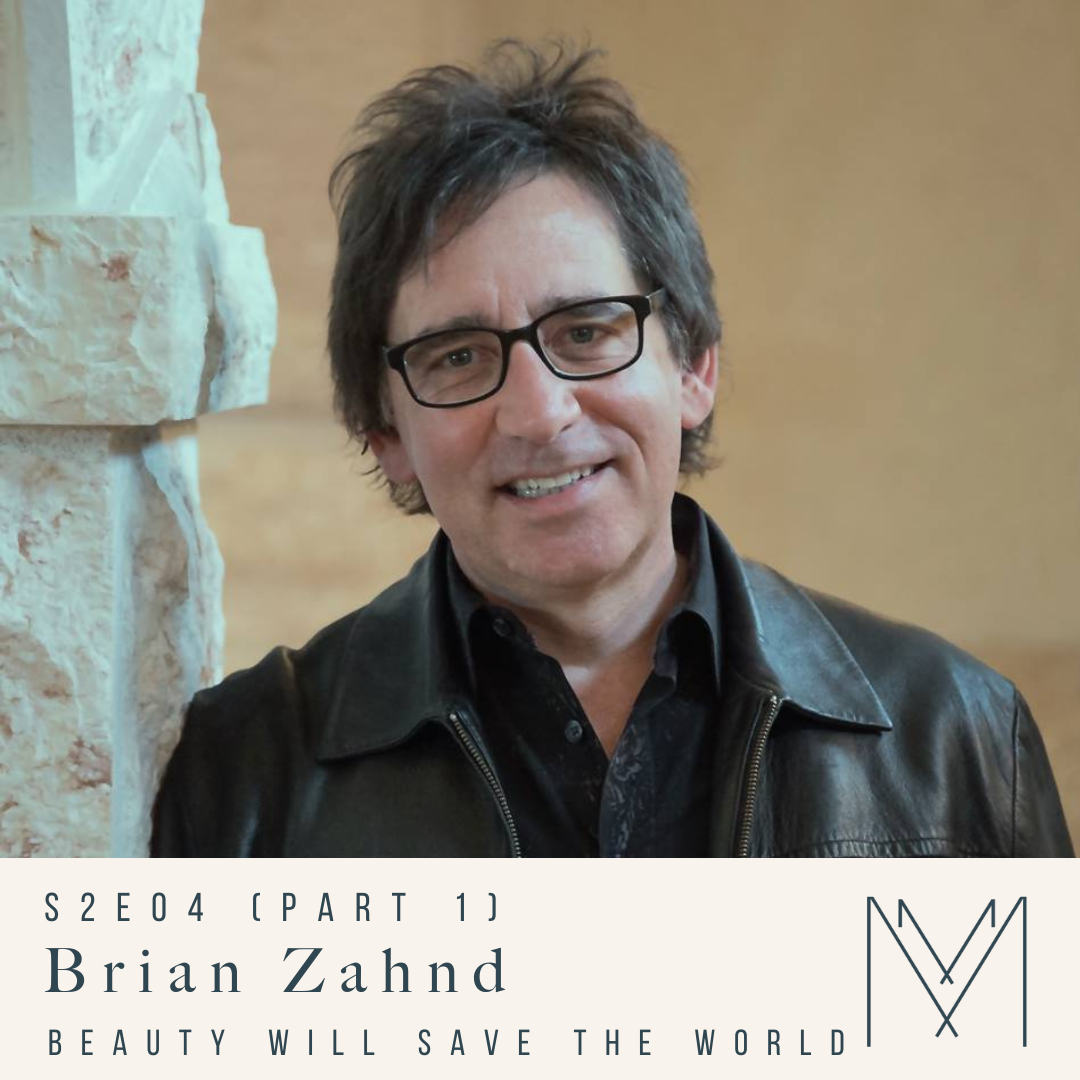
Read MoreThe loss of beauty as a principal value has been disastrous for Western culture and especially for the church. In this episode, author Brian Zahnd discusses the importance of returning to a Christian aesthetic and presenting the gospel as a beautiful alternative to the commercialism of society.
Read MoreArt is an extension of the artist. The environments we create affect our relationship to the world around us. From the beginning of the Genesis story on, humanity has been invited to collaborate with the Spirit of God in establishing environments of beauty and justice on the earth. In this keynote, Stephen discusses how these elements share an important interactive relationship and how as artists, we can assist in establishing beauty and justice in our lives. You can see the film documentary "For The Love Of" mentioned at the beginning of this episode here.
Read More"Strange as it may seem, beauty still needs to be defended. In the history of the West, beauty has played the role of Cinderella to her sisters, goodness and truth." In this talk, author Gregory Wolfe dignifies the role of beauty as an agent for expressing truth.
Read More